
August in Germany usually means half-empty offices and beach towels, but this year the country isn’t slowing down. If you read
our July 2026 roundup, this is the same idea for August: a new childcare right, an EU-wide crackdown on unlabelled AI content, and a Deutsche Bahn points system that just got more complicated. Here are the seven Germany August 2026 changes that internationals living here should know about.
Germany August 2026 Changes Start With a New Right to Childcare
From 1 August, first-graders across the country get a legal right to all-day care at school, under the Ganztagsförderungsgesetz (GaFöG, the all-day care law). According to
the Bundesregierung, parents aren’t required to use it, but the offer has to exist: up to eight hours a day, five days a week, either through an after-school club or a school-based programme. The right starts with Year 1 pupils this school year and expands by one grade every year until it covers Years 1 to 4 by 2029/2030. If you have a child starting school this autumn, ask your Grundschule (primary school) how it works locally, since states and municipalities run the details themselves.
AI-Generated Content Must Now Be Labelled
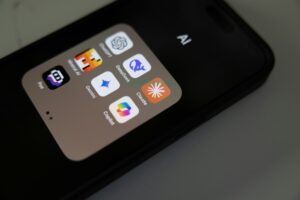
From 2 August, the second stage of the EU’s AI Act applies in Germany. Any company, influencer, or commercial account that publishes content mostly created with artificial intelligence, whether text, images, audio, or video, has to label it clearly. A barely visible watermark doesn’t count; German legal experts quoted by ZDFheute, say the label needs to be genuinely noticeable, like a visible “AI-generated” tag on an image or a spoken disclosure at the start of a voicebot call. Ignore the rule and you risk fines of up to 15 million euros or 3 percent of global annual turnover. The Bundesnetzagentur (Federal Network Agency) is the body handling complaints, and purely private use, like a family chat message stays exempt.
Deutsche Bahn Overhauls Its BahnBonus Points
f you’ve been following our coverage of Deutsche Bahn’s other 2026 changes , here’s the next one: the BahnBonus points system changes from 1 August. Under DB’s own
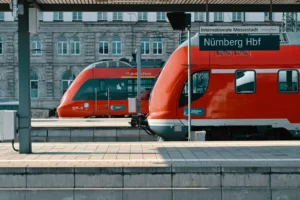
BahnBonus rules, the old fixed system needed 1,000 points for a free second-class one-way journey and 1,500 for first class. The new minimum drops to 750 and 1,250, but only on paper: DB is switching to a dynamic model where the points you actually need depend on the route, how early you book, and how full the train is. Book early or travel off-peak and you might get away with fewer points than before. Book a busy route last-minute and you could need more than ever, with no announced cap. Freifahrt Flex vouchers, the ones not tied to a specific train, get pricier too, up 17 to 33 percent depending on the ticket type.
Blitzermarathon: A Week of Nationwide Speed Checks
From 3 to 9 August, police in 13 federal states run their annual Blitzermarathon (speed week), with extra checks on motorways, main roads, and inside towns, according to the
ADAC. Bavaria, Saxony, and Saarland sit this one out, though Saxony runs its own version later in the month. Expect the heaviest enforcement near schools, construction sites, hospitals, and care homes, the usual accident hotspots. If you’re still driving on a converted non-EU licence, this is a good week to double-check your documents are in the car too. Most states don’t publish check locations in advance, so the easiest move is simply to stick to the limit that week, wherever you’re driving in Germany
Health Insurance Costs Rise for Millions
From 1 August, IKK Classic, one of Germany’s larger statutory health insurers, raises its Zusatzbeitrag (supplementary contribution) from 3.40 to 3.85 percent, per Stiftung Warentest. Combined with the fixed statutory rate of 14.6 percent, members now pay a total contribution rate of 18.45 percent, split evenly between employer and employee, or paid in full if you’re self-employed. A contribution increase triggers a special right to switch providers, but only if you use it by 31 August. This comes on top of the changes we covered in our piece on Germany’s 2027 health insurance reform, so if you’re insured under the GKV system, it’s worth checking your own Krankenkasse rather than assuming yours is unaffected.
A Rare Partial Solar Eclipse Crosses Germany
On 12 August, a partial solar eclipse will be visible across the whole country in the early evening, reaching its peak a little after 8pm local time depending on where you are. The event is only partial here, with the moon covering the largest share of the sun in the southwest and less further north and east. The same eclipse produces a total solar eclipse over parts of Spain, Iceland, and Greenland, the first visible from mainland Europe since 1999. The Bundesamt für Strahlenschutz (BfS, Federal Office for Radiation Protection) has one clear instruction: never look at it without certified eclipse glasses or a proper solar filter. Sunglasses won’t protect your eyes.
New Apprenticeship Year Begins
The new Ausbildung (apprenticeship) year starts on 1 August, and the BIBB (Federal Institute for Vocational Education and Training) confirms 22 modernised trades take effect this year, most of them in construction, covering newer skills like Building Information Modelling and drone-based surveying. If an Ausbildung is your route into Germany, we’ve covered the whole application process for internationals separately, and this is a good month to check whether the trade you’re considering just changed its requirements.
That is the wrap up of Germany August 2026 changes, hope this helps in your daily life in Germany.
AI tools are used to write this piece.
Share this post: