If you use Claude or Gemini to help write an email, a cover letter, or a quick message, there’s now an invisible AI watermark sitting inside the text you get back. You can’t see it. You can copy and paste the words anywhere, and the mark usually travels with them. This isn’t a glitch, and it isn’t spying. It’s Europe’s new law reaching into the tools you already use every day.
What the new AI watermark actually is
On 11 August 2026, Anthropic (the company behind Claude) announced it would start hiding an AI watermark inside the text and images its models produce. For images, it uses a shared industry standard called C2PA, which tucks a signed label into the file. For text, it weaves a faint pattern into the words themselves that special software can detect later. Google’s Gemini already does the same thing with its own system, called SynthID. The mark doesn’t change what the text says or how it reads. Anthropic is also honest about the limits: a detected mark only means Claude probably touched the content, maybe just to edit or proofread it, and heavy rewriting can rub it off.
Why these tools are leaving AI watermark
The reason is the EU AI Act, Europe’s big new law on artificial intelligence. From 2 August 2026, a part of it known as Article 50 asks any company offering AI in Europe to mark AI-generated content in a way machines can read. Brussels wants people to be able to tell, in a world full of AI, what a human wrote and what a machine produced. Because the rule covers anyone serving European users, the major providers are all moving the same way, and several are applying the change worldwide instead of building a separate version just for Europe. So this isn’t one company’s choice. An AI watermark is quickly becoming the industry norm.
Who marks their AI, and who doesn’t
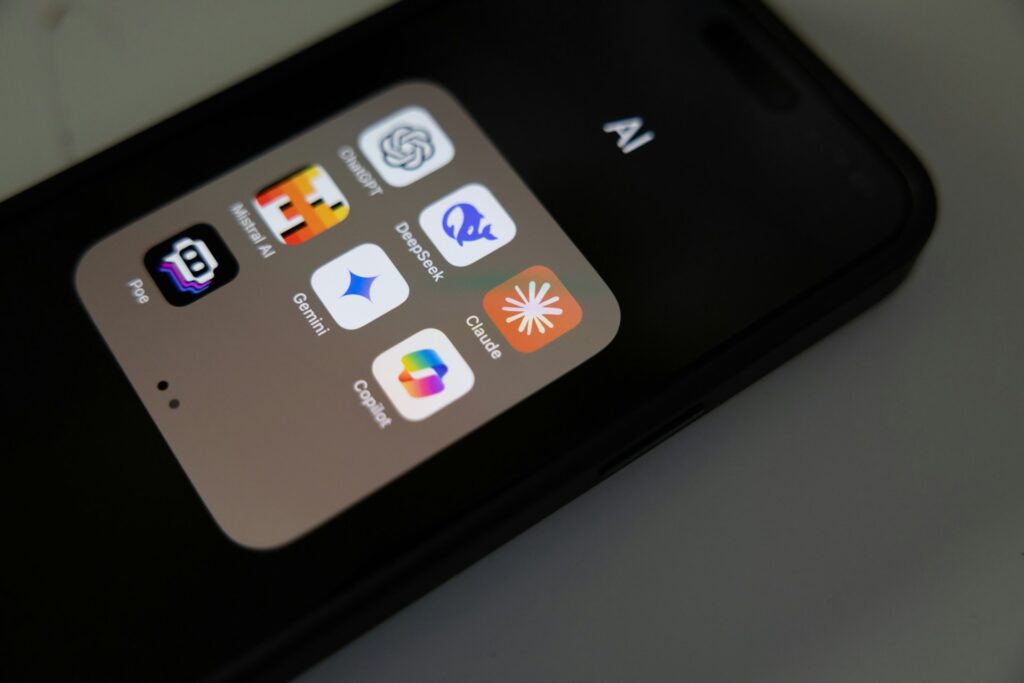
Not every tool does this the same way. Gemini has been marking its output for a while, and now Claude joins it for both text and pictures. OpenAI, the maker of ChatGPT, adds provenance labels to the images it creates, but it still doesn’t place a hidden mark inside the text ChatGPT writes. Meta, the company behind Facebook and Instagram, leans on visible “AI info” labels for images shared on its platforms rather than a mark buried in text. TikTok asks you to select ‘AI Generated’ lable if the content is made using AI. So if you’re keeping track: your AI-written text carries an AI watermark on Gemini and Claude, and for now it doesn’t on ChatGPT.
What this means for you in Germany
Here’s the practical part: who this touches, and who it doesn’t. For everyday private use, you’re not really affected. Chatting with an AI, drafting a personal note, using it to understand a German letter, or messaging family, none of that needs a label, and you don’t need to strip the AI watermark out. The EU AI Act mainly affects content you publish to the public or use commercially. That means influencers posting AI images, businesses and online shops using AI text or photos, and anyone putting AI-made material about public matters out into the world. They now need to label it clearly. Private things like job applications, cover letters and internal emails generally don’t. If you run a business page or sell online in Germany, add a clear, visible note when something is AI-made, because skipping that duty can bring heavy fines. For everyone else, day to day, almost nothing changes. My honest advice stays simple: treat the AI as a helper, not the author, and put your own judgement on top before anything goes public.
AI tools are used to write this piece.
Share this post: