Groceries in Germany don’t have to drain your salary. Most internationals overpay in their first few months simply because they shop at the wrong store or skip a few small habits Germans grew up with. Here’s the short version: where to shop, and five quick wins that cut your bill.
1. The Five Discount Supermarkets Worth Knowing
Germany is the home of the Discounter. No-frills, low-price supermarkets that run on store brands and high-volume basics. As of 2026, Aldi consistently ranks as the cheapest of the major chains, with Lidl and Penny close behind. These five cover most of the country:
Aldi (Nord & Süd) — The original discounter and reliably one of the cheapest in Germany. Aldi splits into Nord (north of a line roughly through Essen) and Süd (everything south), but the pricing strategy is similar. Store-brand quality is genuinely good.
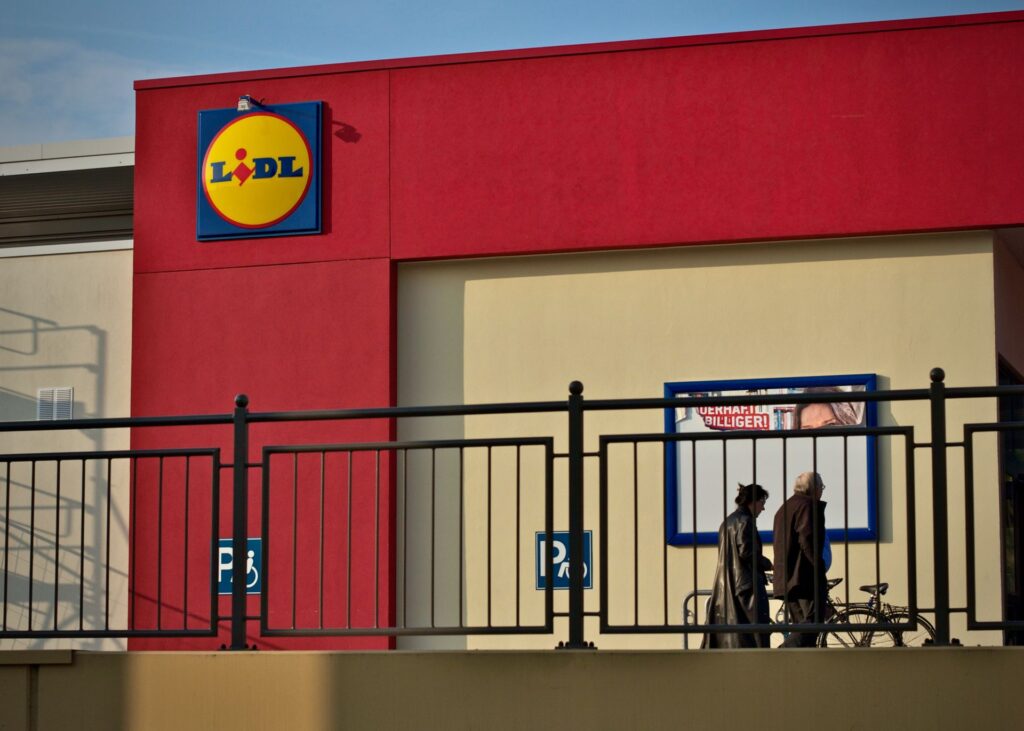
Lidl — Part of the Schwarz Group, Lidl competes head-on with Aldi on price and has a stronger fresh produce and bakery section in most stores. Its Lidl Plus app (free, English available) gives you weekly digital coupons on selected items. .
Netto Marken-Discount — Edeka’s discount arm. Slightly wider product range than Aldi and Lidl, including more international items in some areas.
Penny — Owned by REWE Group. Stores are usually smaller, prices comparable to Aldi and Lidl. A solid backup when the others are out of stock.
Kaufland — Also Schwarz Group, but not a hard discounter. Think of it as a large supermarket with discounter pricing on basics. Best for bigger weekly shops where you want variety (bigger fresh, household, and international aisles) without paying Edeka prices.
2. Quick Wins That Cut Your Bill
Always return your Pfand. Almost every drink bottle and can in Germany has a deposit on it. 8 or 15 cents for reusable (Mehrweg) bottles, 25 cents for single-use (Einweg) plastic bottles and cans. Bring empties back to the Pfandautomat at the supermarket entrance, get a receipt, hand it to the cashier. It’s your money, don’t leave it on the kitchen counter.
Buy the store brand (Eigenmarke). Aldi’s GUT BIO, Lidl’s Milbona and Freeway, Netto’s BioBio, Penny’s Naturgut . These are noticeably cheaper than name brands and the quality is generally on par for everyday staples. Stiftung Warentest (Germany’s independent product testing body) regularly rates many discounter store brands as good or better than the branded alternative. This is the single biggest habit change most newcomers can make.
Check the weekly Prospekt (deal flyer). Each chain rotates a different category on deep discount every week. Free apps kaufDA and marktguru collect every flyer in one place, handy if you want to plan a shop around what’s cheap that week.
Use Too Good To Go for end-of-day deals. The app sells “surprise bags” of unsold food from supermarkets, bakeries, and restaurants at roughly one-third of the original price. Available in most German cities. Great for bread, baked goods, and produce.
Try Asian, Turkish & African markets for staples. Rice, lentils, spices, fresh herbs, and many vegetables tend to be much cheaper at neighborhood ethnic grocers than at any supermarket. Worth a 10-minute detour, especially if you cook from these cuisines regularly.
3. The Bottom Line
If you’re trying to keep your monthly food spend under control, the recipe is simple: do your weekly shop at Aldi, Lidl, Penny or Netto; use Kaufland for the bigger top-up; always return your Pfand; default to store brands; let the apps tell you what’s on offer this week; and lean on the Wochenmarkt for seasonal produce.
(AI tools may be used in writing this piece)
Share this post: