
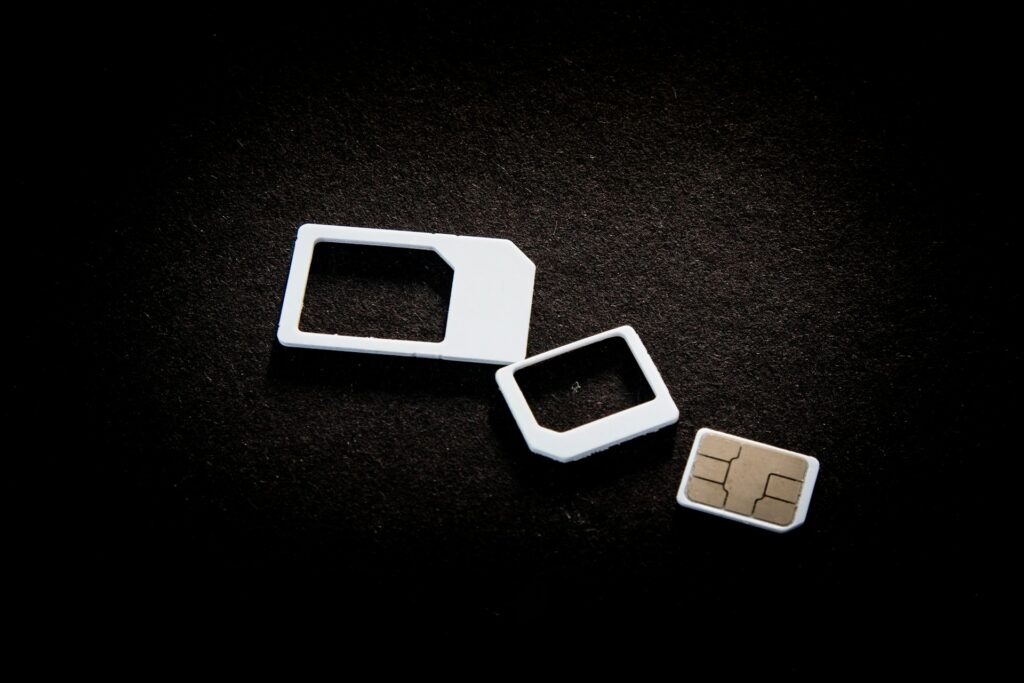
You’ve just landed, your suitcase is still zipped, and you need a German number for the Bürgeramt to text you, for your landlord to call you, for your bank app to send you a code. The good news: getting a German SIM card is one of the easiest things you’ll do here. The one twist most newcomers don’t expect is that Germany legally requires ID verification for every SIM card, even prepaid ones. Here’s exactly how it works.
1. Prepaid or Contract SIM Card? Choose the Right One First
Prepaid (Prepaid-Tarif). No credit check, no long-term commitment, activate the same day you arrive. The obvious starting point for almost everyone new to Germany.
Contract (Vertrag). Usually cheaper per gigabyte and sometimes bundled with a phone, but providers typically want a German IBAN for direct debit, and many run a SCHUFA check. Hold off until you’re more settled.
Start with prepaid. Switch to a contract once your Anmeldung and bank account are sorted.
2. The One Rule Nobody Warns You About
Every SIM card here, prepaid included has to be tied to a verified identity before it works. Not a soft “email us your ID” check either; it’s actual law, enforced by the Bundesnetzagentur, in place since 2017. If you’re coming from a country where you grab a SIM off a shelf and pop it in, this will feel unusually bureaucratic. Welcome to Germany.
In person — hand over your passport or ID at the shop counter, done in two minutes.
VideoIdent — a short video call through the provider’s app where someone checks your document over camera, usually 5–10 minutes.
PostIdent — the same idea, but in person at a Deutsche Post branch.
EU citizens can use their national ID card. Non-EU citizens need a passport, and most providers will also want to see your visa or residence permit.
3. Where to Actually Go (or Click) to Get One
In person, if you want it sorted today: Telekom, Vodafone, and O2 all run their own shops in every German city, and staff there can register you on the spot. Supermarkets Aldi, Lidl, Rewe, Edeka, and Penny all sell prepaid starter packs right near the checkout, no appointment needed. Electronics stores like MediaMarkt and Saturn stock them too, and some kiosks and petrol stations carry the basics.
Online, if you’d rather order ahead: every provider sells directly through its own website, and the SIM (or eSIM QR code) ships to whatever address you give, a hotel, an Airbnb, a friend’s place all work fine, since this is just a delivery address, not your Anmeldung. You then finish the ID verification yourself through the provider’s app.
When you’re comparing plans online, check three things: which network it actually runs on, the price per gigabyte, and how the ID check works. Some providers let you verify instantly in-app, others make you book a slot at the post office, which can add days.
4. Every Provider Worth Knowing, by Network
Germany really only has three physical networks – Telekom, Vodafone, and O2 and almost every brand you’ll see is just reselling one of them at a different price point.
On the O2 network (cheapest data, patchier in rural areas): Aldi Talk, Blau.de, Lebara, WinSIM
On the Vodafone network (solid middle ground): Lidl Connect, otelo, Lycamobile
On the Telekom network (priciest, but by far the best coverage outside big cities): congstar, PENNY Mobil, fraenk
If you’re regularly calling family back home, look at Lebara or Lycamobile specifically, they’re built for internationals and often bundle genuinely cheap international minutes to 40-plus countries, which can save you real money over a standard plan.
5. Step-by-Step: Getting Your SIM Card
Step 1 – Pick a plan. Match data, network, and price to what you actually need.
Step 2 – Get the SIM. Grab it in a shop or supermarket, or order online for delivery.
Step 3 – Verify your identity. VideoIdent, PostIdent, or in person, whichever fits your schedule.
Step 4 – Activate and top up. Verification usually clears within minutes to a couple of hours.
Step 5 – Save the number everywhere. Anmeldung appointment, bank, employer, landlord. You’ll be typing it out a lot in your first month
6. Want Data Before You Even Land?
Install a travel eSIM (Airalo, Holafly, and similar apps) before your flight so you’re online the moment you touch down. Handy for day one, but it’s not a substitute for a real German number, you’ll still need an ID-verified local SIM for anything official. The good news: Telekom, Vodafone, and O2 all offer their own eSIMs now too, verified the exact same way as a physical card, so if your phone supports it, you can skip the plastic entirely and never touch a SIM tray.
7. Switching to a Contract, Later
Once your Anmeldung is done and you’ve got a German bank account, a contract might make more sense. A few things worth knowing before you sign anything: by law, the initial term can’t run longer than 24 months, and providers must also offer a 12-month version. Once a fixed-term contract auto-renews, it quietly becomes a rolling monthly one you can cancel anytime with a month’s notice. And switching providers later costs you nothing on your number, porting is free.
8. Quick Reference Checklist
✅ Passport or ID (+ visa/residence permit for non-EU citizens)
✅ Decide: prepaid (no commitment) or contract (needs IBAN, often SCHUFA)
✅ Complete ID verification – in person, VideoIdent, or PostIdent
✅ No Anmeldung needed for prepaid SIMs
✅ Check which network a “budget” brand actually rides on before buying
✅ Calling home often? Look at Lebara or Lycamobile first
✅ Know the 24-month max / 12-month option rule before signing a contract
AI tools may be used to write this piece.
Share this post: